 Gilding
Arts Studio
Gilding
Arts Studio "Opening the Eyes"
SACRED COLOURS
Buddhist Art for the 21st Century
Mañjuśrī
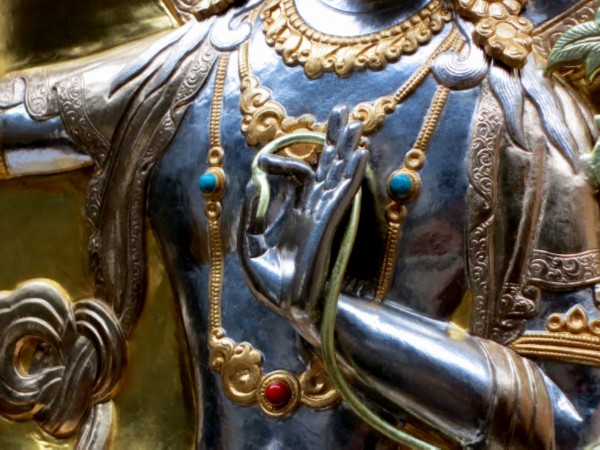
Gilt finished in Platinum, 23 karat Red Gold, 18 karat Green Gold, also Fine Gold, Palladium and Silver. Turquoise and Coral gemstones represent the jewellery typically worn by the bodhisattva. Formed in copper repoussé, with the hands cast from wax models.
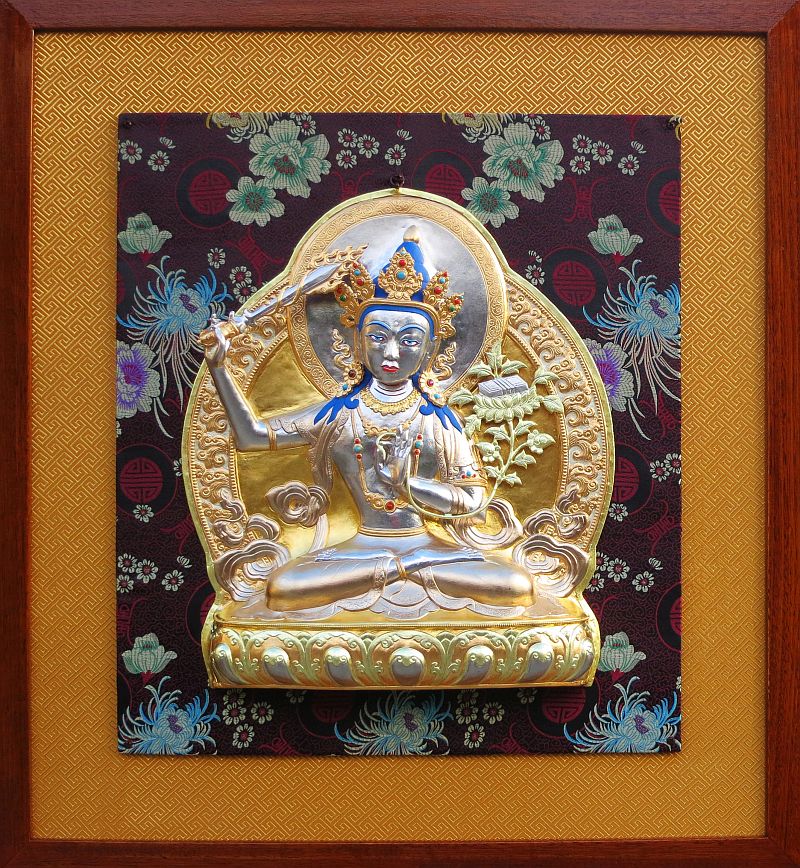
Mañjuśrī is a bodhisattva associated with transcendent wisdom in Mahāyāna Buddhism. The Sanskrit name Mañjuśrī can be translated as "Gentle Glory".
Mañjuśrī is depicted as a male bodhisattva wielding a flaming sword in his right hand, representing the realization of transcendent wisdom which cuts down ignorance and duality. The text supported by the lotus held in his left hand is a Prajñāpāramitā sūtra, representing his attainment of ultimate realization from the blossoming of wisdom.
Mañjuśrī is one of the Four Great Bodhisattvas of Chinese Buddhism, the other three being: Kṣitigarbha, Avalokiteśvara, and Samantabhadra.
In Tibetan Buddhism Mañjuśrī is sometimes depicted in a trinity with Avalokiteśvara (Tib. Chenrezig) and Vajrapāṇi (Tib. Channa Dorje).
My original Mañjuśrī drawing.
%20600w.jpg)

Planning the repoussé with Saroj and Surendra Shakya in Patan


Saroj Shakya making the first push of repoussé on a sheet of copper

Second push of repoussé after chasing

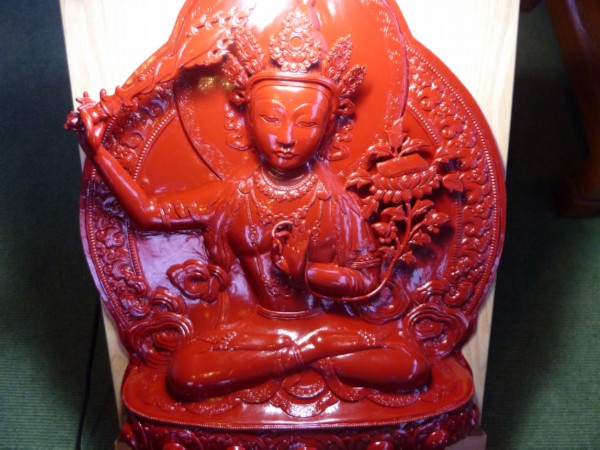
All the extra elements are soldered on (such as the hands, forearms, lotus stem with the Prajñāpāramitā sūtra, flaming sword, crown and earrings). The copper is then sealed with enamel in preparation for sizing and laying the platinum and goldleaf.
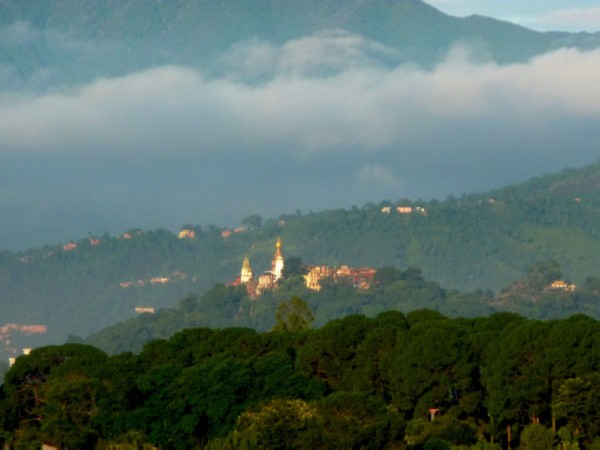
The view from my studio in Kathmandu. According to the Swayambhu Purana, the Kathmandu Valley was once a lake. It is believed that Mañjuśrī saw a lotus flower in the center of the lake and cut a gorge at Chovar to allow the lake to drain. The place where the lotus flower settled became Swayambhunath Stupa and the valley thus became habitable.
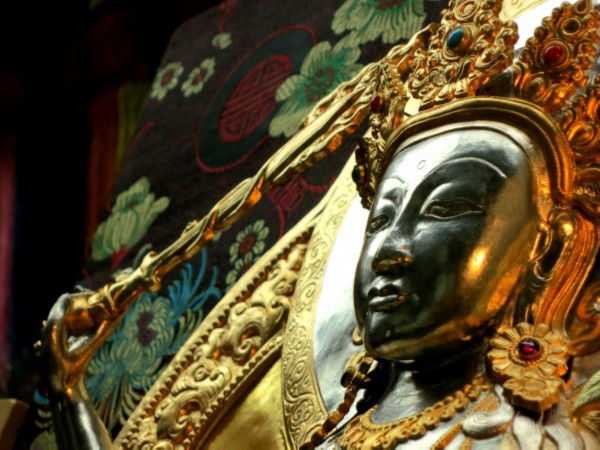
Repoussé is a metalworking technique in which a malleable metal is ornamented or shaped by hammering from the reverse side. There are few techniques that offer such diversity of expression while still being relatively economical. Chasing is the opposite technique to repoussé, and the two are used in conjunction to create a finished piece. It is also known as embossing which uses pre-formed dies and punches.


for more repoussé - click here
© thegilder 2017 - all rights reserved